
What are toilet repairs and installation?
Toilet repairs and installation cover the plumbing faults that stop a toilet flushing, filling or sealing properly, and the work of removing an old toilet and fitting a new one. Common repairs are a cistern that keeps running into the pan, a flush that needs several attempts, a leak between the cistern and pan, and a leaking pan connector at the soil pipe.
Replacement is usually a like-for-like swap of a close-coupled toilet, but can also mean a back-to-wall pan with a concealed cistern or a change of outlet position. A wall-hung toilet needs a support frame and usually wall and tiling work, so it is normally priced as part of a bathroom project.
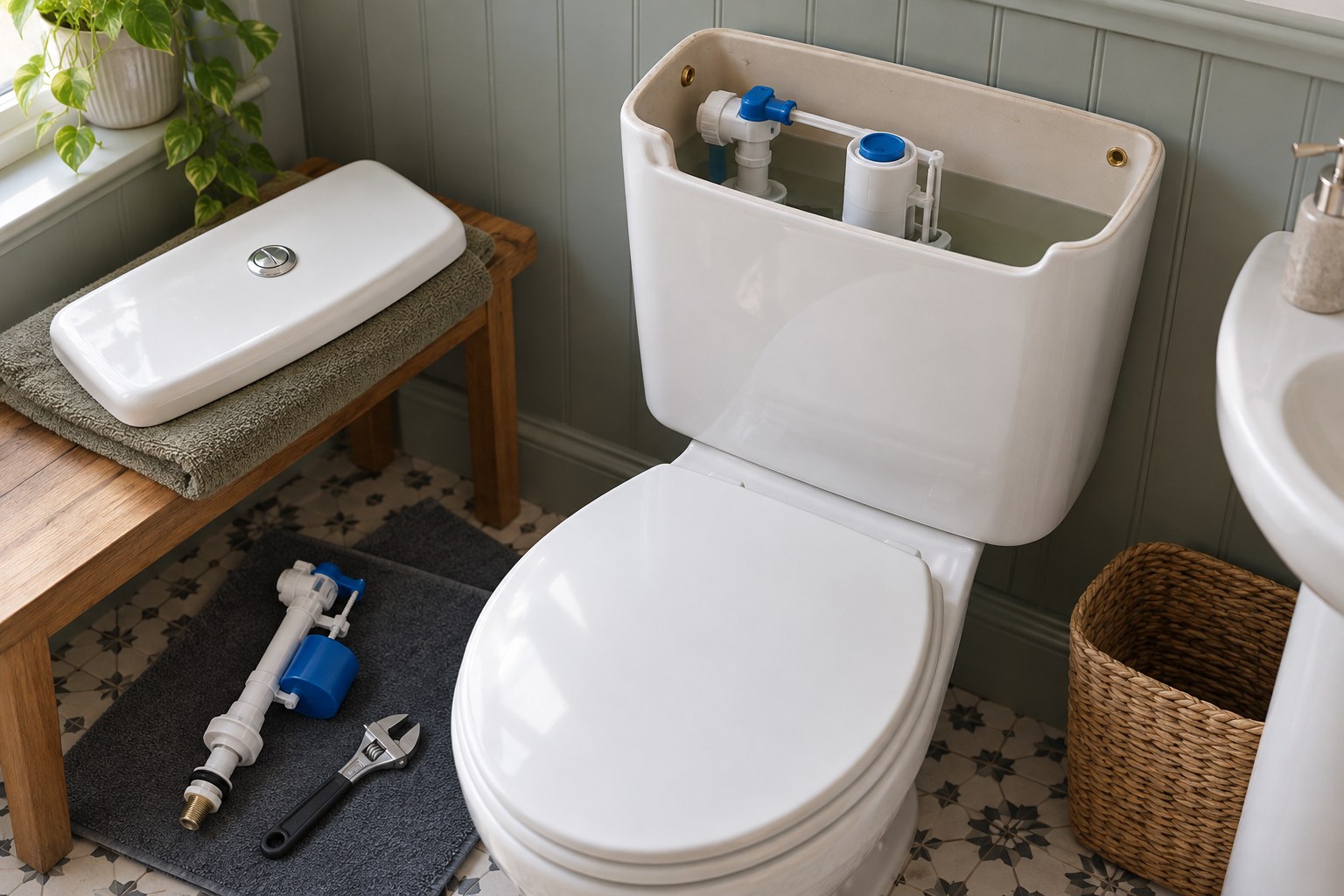
Signs you need toilet repairs or installation
- Water trickles into the pan constantly, or the cistern refills on its own every few minutes
- The flush button or lever needs several presses, or the flush is weak
- Water appears on the floor around the base after flushing
- The overflow pipe outside is dripping or running
- The pan rocks or has moved away from the wall
- The cistern or pan is cracked, or the cistern takes a long time to fill
A cistern that runs into the pan can waste a lot of water without being noticed, especially on a metered supply. Dropping a little food colouring into the cistern and waiting without flushing will show whether it is passing water into the bowl.
Toilet repair and installation options explained
- Fill valve replacement — the valve that refills the cistern can stick open or fail to shut off. Modern bottom-entry or side-entry valves replace old float-arm ballcocks.
- Flush valve or siphon repair — push-button cisterns use a flush valve with a seal that wears and lets water pass; lever cisterns use a siphon with a diaphragm that splits and weakens the flush.
- Seal and connector replacement — leaks between a close-coupled cistern and pan are usually the large washer between them, and leaks behind the pan are usually the pan connector into the soil pipe.
- Toilet replacement — the old suite is removed and a new close-coupled, back-to-wall or comfort-height toilet is fitted, with a new connector and isolating valve.
What to include when asking for a quote
For a repair, say whether the toilet has a lever or a push button, whether the cistern sits on the pan or is concealed behind a panel, and exactly when the problem happens: constantly, only after flushing, or only when filling. A photograph inside the cistern with the lid off helps the plumber recognise the valves and bring matching parts.
For a replacement, measure from the finished wall behind the toilet to the centre of the soil pipe, and note whether the waste leaves the pan horizontally through the wall or vertically through the floor. That decides which new pans will fit without moving the soil pipe. Say whether the floor is tiled under the old pan, since a smaller footprint can leave a gap in the tiling.
Tell the plumber if this is the only toilet in the home, so the work can be planned to leave you without one for as short a time as possible. Say whether you are supplying the suite and whether the price should include taking the old one away.
How much does toilet repairs and installation cost?
| Job | Typical cost |
|---|---|
| Fill valve or flush valve repair | £90 – £160 |
| Pan connector or cistern seal replacement, refix pan | £120 – £220 |
| Remove old toilet and fit a new close-coupled suite | £250 – £550 |
The upper figure assumes a mid-range toilet supplied by the plumber. Back-to-wall and concealed cistern installations, and moving the soil pipe, cost more.
The toilet repairs and installation process: what to expect
- Diagnosis. The plumber checks where water is passing or leaking and which valves and seals are fitted.
- Isolation and emptying. The supply is turned off at the isolating valve or stopcock and the cistern and pan are emptied.
- Repair or removal. Worn valves, seals or connectors are replaced, or the old suite is disconnected and lifted out.
- Fitting. A new pan is positioned and fixed level, the cistern is mounted and connected to the supply and soil pipe.
- Testing. The toilet is flushed several times to check the fill level, flush and every joint for leaks.
- Finishing. Sealant is applied around the base where appropriate and the old suite is removed if agreed.
Planning permission and building regulations
A straightforward replacement in the same position normally does not need a planning application. Moving the WC, altering the soil connection or adding new drainage can bring building control requirements into play. Requirements differ across the UK; Approved Document H gives drainage guidance for England. Ask the installer or local building control about the actual proposal, and choose compliant water fittings.
For a proposed macerating WC, ask the installer to check the permitted arrangement and access for maintenance before buying equipment. In England, Approved Document G sets conditions for using a macerator, including access to a WC with gravity drainage. Get advice for the UK nation and property concerned rather than assuming any available corner can become a toilet.
How to choose a plumber for toilet repairs and installation
- Ask whether the plumber carries common fill and flush valves or needs to order parts
- Check whether they will fit a suite you supply, and whether a new pan connector is included
- Confirm the old toilet will be taken away, or whether you need to dispose of it
- Ask how long you will be without a working toilet
- Ask whether any tiling or flooring repairs are included
- Check membership of WaterSafe or a similar approved contractor scheme
Concealed cisterns behind panels and furniture units need an access panel for future repairs. If yours has none, ask the plumber how they will reach the valves and what it means for the price.
Frequently asked questions
Why does my toilet keep running?
Usually the fill valve is not shutting off, so water rises into the overflow, or the flush valve seal is worn and lets water pass into the pan. Both are common repairs that can normally be done in one visit.
Can a plumber fit a toilet I have bought myself?
Most plumbers will. Check that the pan suits the position and height of your soil pipe before buying, and confirm that the fitting price includes a pan connector, isolating valve and removal of the old toilet.
How long will I be without a toilet?
A typical repair takes one to two hours. A like-for-like replacement is usually finished in a morning or afternoon, although concealed cisterns or soil pipe changes take longer.
Do I need building regulations approval to move a toilet?
Replacing a toilet in the same place does not. Moving it or adding a new one involves new drainage, which may need building control approval. Ask your plumber to confirm before work starts.
Request toilet repairs and installation quotes
My Plumbing Prices is a matching service for independent plumbing businesses. One free online enquiry can help you receive up to four quotations from local plumbers, depending on coverage, the work requested and availability. Four quotations are not guaranteed, and there is no obligation to accept one.
Describe the problem with the details above so plumbers can judge the job before contacting you. If water is escaping now, close the stopcock first: this form is for quotations and is not an emergency response line.