
What is an emergency plumber?
An emergency plumber is a plumber who attends at short notice to stop water escaping, isolate a failed fitting or restore a supply that has been lost. Typical call-outs are a pipe that has split after a frost, a leak coming through a ceiling, a cistern overflowing faster than it drains, or a stopcock that will not close when you need it to.
The first job on an urgent visit is usually to make the property safe: find and close the right valve, drain down if needed and stop further damage. A permanent repair may follow on the same visit if the plumber carries the parts, or be booked for a normal working day when labour rates are lower. Being clear about which stage you are paying for avoids most disputes over emergency invoices.
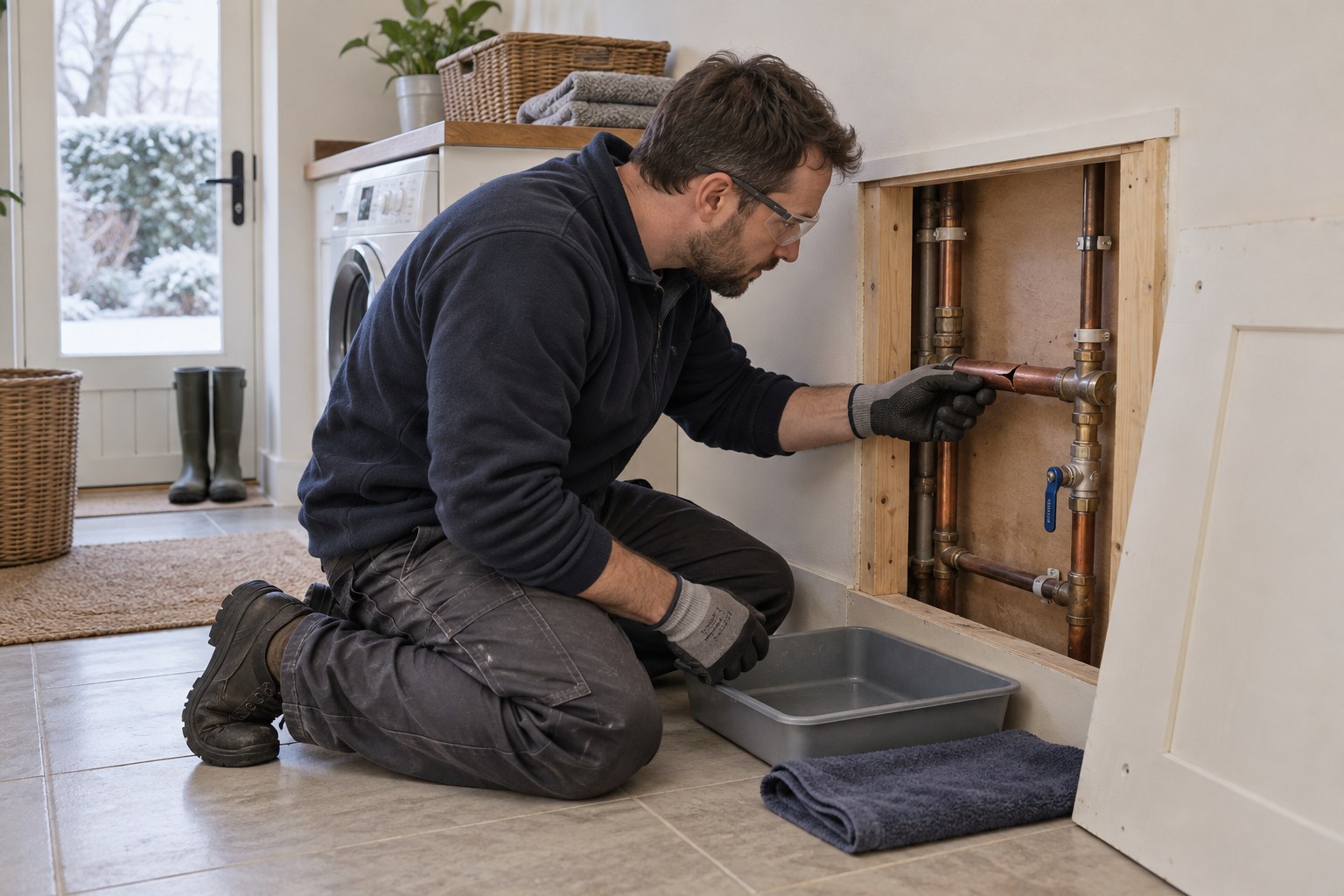
Signs you need an emergency plumber
- Water is dripping or pouring through a ceiling, light fitting or downlighter
- A pipe has split or a joint has blown and the leak continues after the stopcock is closed
- The stopcock is seized, snapped or spins without shutting off the supply
- A cistern or cold water tank is overflowing and the overflow cannot keep up
- The only toilet in the home is blocked or leaking from the pan connector every time it is flushed
- You have no cold water at all, and neighbours and your water supplier report no wider outage
Some problems feel urgent but can usually wait for a daytime visit: a dripping tap, a slow-draining basin, or a toilet that runs on but stays inside the pan. Waiting until the morning can make a noticeable difference to the bill.
Emergency call-out options explained
- Make-safe visit — the plumber isolates the leak, caps or clamps the damaged pipe and leaves the rest of the house with water where possible. The permanent repair is priced and booked separately.
- Make-safe and repair — where the fault is accessible and the parts are on the van, the plumber cuts out the damaged section, fits new pipe or fittings and pressure-tests before leaving.
- Out-of-hours versus next-morning — if water is safely off and there is a second toilet, booking the repair for normal hours is often far cheaper than paying night or bank holiday rates.
Pricing is usually set out in one of three ways: a fixed call-out fee that includes the first hour, an hourly rate with a minimum charge, or a fixed price for the whole job. Ask which applies before the plumber sets off, and what the rate becomes after midnight or at weekends.
What to include when asking for a quote
Say straight away whether the water is off and whether the leak has actually stopped. A plumber prices a leak that is still running very differently from one that has been isolated and only needs a repair. If the stopcock is stiff, missing or broken, say so: it changes the tools and time needed on arrival.
Describe your hot water system. With a cold water tank in the loft, closing the main stopcock does not stop water draining from the tank, so the plumber may talk you through closing the gate valve on the tank outlet instead. A combination boiler or unvented cylinder behaves differently. Mention any wet electrical fittings and keep away from them. Isolate power only from a dry, safe position; do not touch wet switches or enter standing water to reach the consumer unit.
Ask for the call-out fee, the period it covers, the hourly rate after that and whether common parts are charged separately. If your insurer may be involved, ask for an itemised invoice that names the cause of the leak, along with photographs of the damaged pipe or fitting.
How much does an emergency plumber cost?
| Job | Typical cost |
|---|---|
| Daytime call-out, simple make-safe | £100 – £180 |
| Evening or weekend call-out with a straightforward repair | £180 – £300 |
| Overnight or bank holiday call-out, complex repair | £300 – £450+ |
Emergency pricing varies more than any other plumbing work, because the time of day, travel and whether the repair is finished on the same visit all change the total. These figures are a guide, not a quote; confirm the call-out fee and hourly rate before the plumber travels.
The emergency call-out process: what to expect
- Phone triage. The plumber asks what is leaking, whether the water is off and how to reach the property, and confirms the call-out charge.
- Isolation. On arrival the supply is shut off at the right point, whether that is the stopcock, an isolating valve or the tank outlet.
- Finding the source. Floor coverings, boxing or bath panels may need lifting to see the damaged pipe or fitting.
- Make-safe or repair. The pipe is capped or clamped, or the damaged section is cut out and replaced if parts are available.
- Testing. Water is turned back on and the repair is checked under pressure before the plumber leaves.
- Advice and paperwork. You should receive an invoice describing the cause and work done, and advice on drying out wet ceilings and floors.
Planning permission and building regulations
Isolating a leak and making an ordinary repair usually does not call for a planning application. Wider alterations, work to listed fabric or changes to drainage may need further checks. Drinking-water fittings must meet the rules applying in the relevant UK nation; WaterSafe Register explains approved contractor schemes. If the leak appears outside the property or the boundary of responsibility is unclear, ask your water supplier first.
Responsibility for an outside leak depends on the pipe and ownership arrangement, especially where supplies are shared. Ask your water supplier to confirm the boundary of responsibility before authorising excavation or a supply-pipe repair.
How to choose an emergency plumber
- Ask for the call-out fee, what it covers and the hourly rate afterwards before the plumber travels
- Get an estimated arrival time and ask to be called if it changes
- Agree a maximum spend for the visit before any work beyond making safe
- Ask whether a permanent repair is included or will be quoted separately
- Request an itemised invoice and photographs if you may claim on insurance
- Check whether the plumber is listed with WaterSafe or a similar approved contractor scheme
Be wary of very low advertised call-out fees with no stated hourly rate. The total for a two-hour night visit is the figure to compare, not the price to get someone through the door.
Frequently asked questions
What counts as a plumbing emergency?
Water escaping that you cannot stop, a leak near electrics, a failed stopcock, an overflowing tank or cistern, the only toilet in the house being out of use and a total loss of cold water are the usual reasons to pay for an urgent visit. A dripping tap or slow drain can normally wait for a daytime appointment.
Is an emergency plumber more expensive at night?
Usually, yes. Many plumbers charge a higher call-out fee and hourly rate in the evening, overnight, at weekends and on bank holidays. If the water is off and the house is usable, booking the repair for normal hours is often cheaper.
Can an emergency plumber repair my boiler?
Only if they are Gas Safe registered for that type of appliance. Many plumbers are not, so if the problem is the boiler itself rather than a leaking pipe or valve, ask for a Gas Safe registered engineer and check their registration card.
Will the leak be fixed permanently on the first visit?
Sometimes. If the damaged pipe is easy to reach and the parts are on the van, the repair can be finished straight away. Otherwise the plumber will make the leak safe and quote for a permanent repair on a later visit.
Request emergency plumber quotes
My Plumbing Prices is a matching service for independent plumbing businesses. One free online enquiry can help you receive up to four quotations from local plumbers, depending on coverage, the work requested and availability. Four quotations are not guaranteed, and there is no obligation to accept one.
Describe the problem with the details above so plumbers can judge the job before contacting you. If water is escaping now, close the stopcock first: this form is for quotations and is not an emergency response line.