
What are leaking pipe repairs?
Leaking pipe repairs cover finding and fixing water escaping from the pipes that carry your supply and waste water: a compression joint that has started to weep, a pinhole in an old copper pipe, a push-fit fitting that has worked loose, or a section split by frost. The leak may be obvious under a sink or hidden under floorboards, behind bath panels or inside boxed-in pipework.
Most of the work is in finding the leak. Once the plumber has located it, the repair itself is often a short job: cutting out the damaged section and joining in new pipe. Hidden leaks cost more because of the time spent opening up and putting back floors and boxing, not because the repair is complicated.
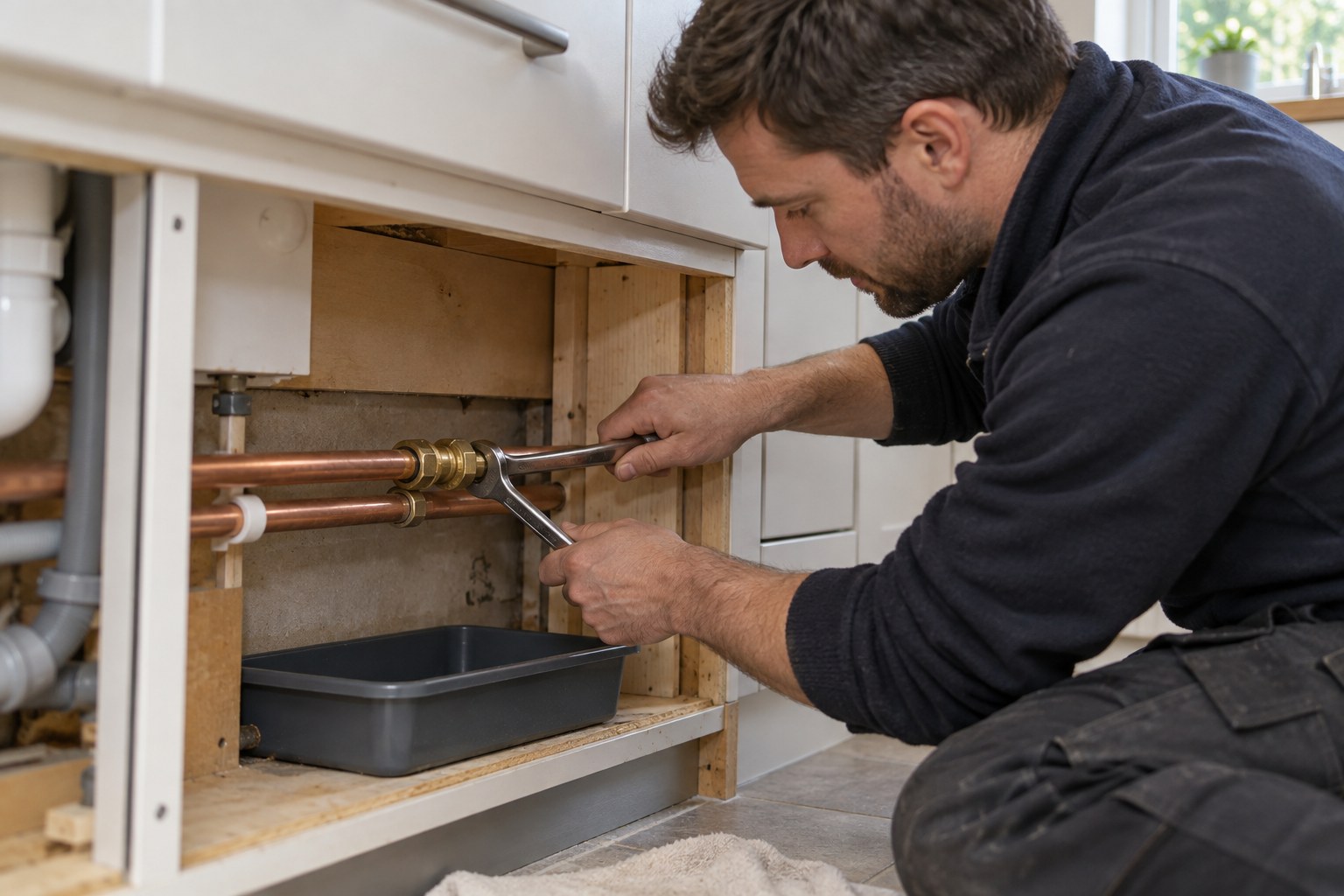
Signs you need leaking pipe repairs
- A brown ring or damp patch on a ceiling below a bathroom, kitchen or airing cupboard
- Floorboards, skirting or carpet that feel damp with no spill to explain it
- Green or white crusting on copper joints, which often means a slow weep
- Drips collecting in the cupboard under a sink or around a hot water cylinder
- Your water meter moves when every tap, toilet and appliance is off
- A hissing or trickling sound inside a wall or floor when no water is being used
A useful first test is to note the meter reading at night and check it again in the morning without using any water. If the number has moved, there is a leak somewhere on the pressurised supply.
Leaking pipe repair methods explained
- Remaking or replacing a joint — a weeping compression fitting may need a new olive, or the fitting replacing altogether. Soldered joints that have failed are usually cut out and remade.
- Cutting in a new section — a pinholed or split length of copper or plastic pipe is cut out and a short new section joined in with compression, soldered or push-fit couplers.
- Replacing a run of pipe — where old copper is thin and pitted along its length, or the pipe is lead, replacing the run is usually better value than patching one leak at a time.
- Tracing a hidden leak — plumbers may use meter tests, moisture meters and thermal imaging. For leaks in solid floors or underground supply pipes, specialist acoustic or tracer-gas detection may be recommended.
Waste pipes leak differently. A leaking waste joint only drips when that bath, basin or appliance is draining, which is a quick way to tell it apart from a supply leak.
What to include when asking for a quote
Explain exactly where you have seen water, what is directly above and below that spot, and whether it appears all the time or only when something is in use. A stain that grows only after a bath has drained points to the waste or the bath seal; a patch that stays wet overnight points to a supply or heating pipe.
Tell the plumber whether the floors are boarded or solid concrete, and whether the suspected pipework is behind tiles, kitchen units or fixed boxing. A leak in pipework buried in a screeded floor is a much bigger job than one under a lifted floorboard, and it changes both the method and the price. If you have done a meter test, give the readings.
Ask whether the quote includes finding the leak or assumes it is where you think it is, and how making good is handled. Refitting boards is normally included; replacing tiles, patching plaster and redecorating usually are not, unless the quote says so.
How much does leaking pipe repairs cost?
| Job | Typical cost |
|---|---|
| Accessible joint or short section under a sink or in a cupboard | £120 – £200 |
| Pipe repair under floorboards or behind boxing | £200 – £400 |
| Hidden leak needing tracing, extra access and making good | £400 – £600+ |
The repair itself is often quick; access, leak tracing and putting finishes back are what move the price. Ask whether tiling, plastering and decoration are included or excluded.
The leaking pipe repairs process: what to expect
- Confirming the leak. The plumber checks the meter or listens for running water and narrows down which part of the system is leaking.
- Tracing the source. Moisture readings, visual checks and, where needed, thermal imaging help pinpoint the leak before anything is opened up.
- Isolating and draining. The supply to that section is shut off and the pipe drained so it can be cut and joined.
- Repair. The damaged joint or section is cut out and replaced with new pipe and fittings suitable for drinking water.
- Pressure test. Water is restored and the repair is checked for weeps, often left visible for a short time before boxing is refitted.
- Making good. Boards and panels are refitted, and the plumber advises on drying out wet ceilings and floors.
Planning permission and building regulations
A straightforward pipe repair normally does not need planning permission, but opening listed floors or making wider alterations can require consent. Drinking-water pipework and fittings must meet the relevant national water fittings rules. WaterSafe Register provides a route to approved contractors. For old lead supplies, discuss replacement and any supplier scheme before arranging the extent of the work.
If you find lead supply pipes, many water suppliers encourage replacement and some offer help with the section they are responsible for. Some suppliers also offer a one-off allowance on metered bills where a supply pipe leak has been repaired promptly, so it is worth asking yours. In listed buildings, lifting historic floors or cutting into original fabric may need consent; check with the local planning authority first.
How to choose a plumber for leaking pipe repairs
- Ask how the plumber will locate the leak before lifting floors or removing tiles
- Check whether the quote covers leak tracing as well as the repair
- Confirm which pipe materials and fittings will be used and that they suit drinking water
- Ask what making good is included and what is left to you or another trade
- Ask about a guarantee on the repaired joints
- Check whether the business is a member of WaterSafe or another approved contractor scheme
If a plumber suggests replacing a whole run, ask them to show you why. Pitted or thin-walled copper and lead pipe are good reasons; a single failed joint on otherwise sound pipe usually is not.
Frequently asked questions
How do I know if the leak is from a supply pipe or a waste pipe?
Supply pipes are under pressure and leak all the time, so the meter keeps moving and the area stays wet. Waste pipes only leak while water is draining from a bath, basin, shower or appliance, so the damp appears after use and may dry in between.
Can a leaking pipe be repaired without lifting the floor?
Sometimes. If the leak can be traced to an accessible point, such as a joint under a sink or behind a removable bath panel, no floor needs lifting. Leaks under floorboards normally mean lifting one or two boards; pipes in solid floors may need a different route altogether.
Should old lead pipes be replaced rather than repaired?
Usually, yes. Lead pipes can affect drinking water quality, and joints on old lead often fail again. Many water suppliers recommend replacing lead supply pipes, so ask your plumber to quote for replacement as well as repair.
Will my water supplier reduce my bill after a leak?
Some suppliers offer a one-off leak allowance on metered bills when a supply pipe leak has been repaired promptly. Terms vary, so contact your water supplier and keep the plumber’s invoice as evidence of the repair.
Request leaking pipe repairs quotes
My Plumbing Prices is a matching service for independent plumbing businesses. One free online enquiry can help you receive up to four quotations from local plumbers, depending on coverage, the work requested and availability. Four quotations are not guaranteed, and there is no obligation to accept one.
Describe the problem with the details above so plumbers can judge the job before contacting you. If water is escaping now, close the stopcock first: this form is for quotations and is not an emergency response line.