
What is tap repair and replacement?
Tap repair and replacement is the work of stopping a tap from dripping, leaking or sticking, or removing it and fitting a new one. Repairs usually mean a new rubber washer on a traditional tap, a new ceramic cartridge on a quarter-turn or lever tap, or fresh O-rings where a swivel spout leaks at its base. Replacement covers kitchen mixers, basin taps, bath taps and bath shower mixers.
A dripping tap wastes more water than most people expect, and the constant flow can stain enamel and ceramic. Many taps can be repaired for less than the cost of a new one, but an old or obsolete tap with no spare cartridge available is usually better replaced.
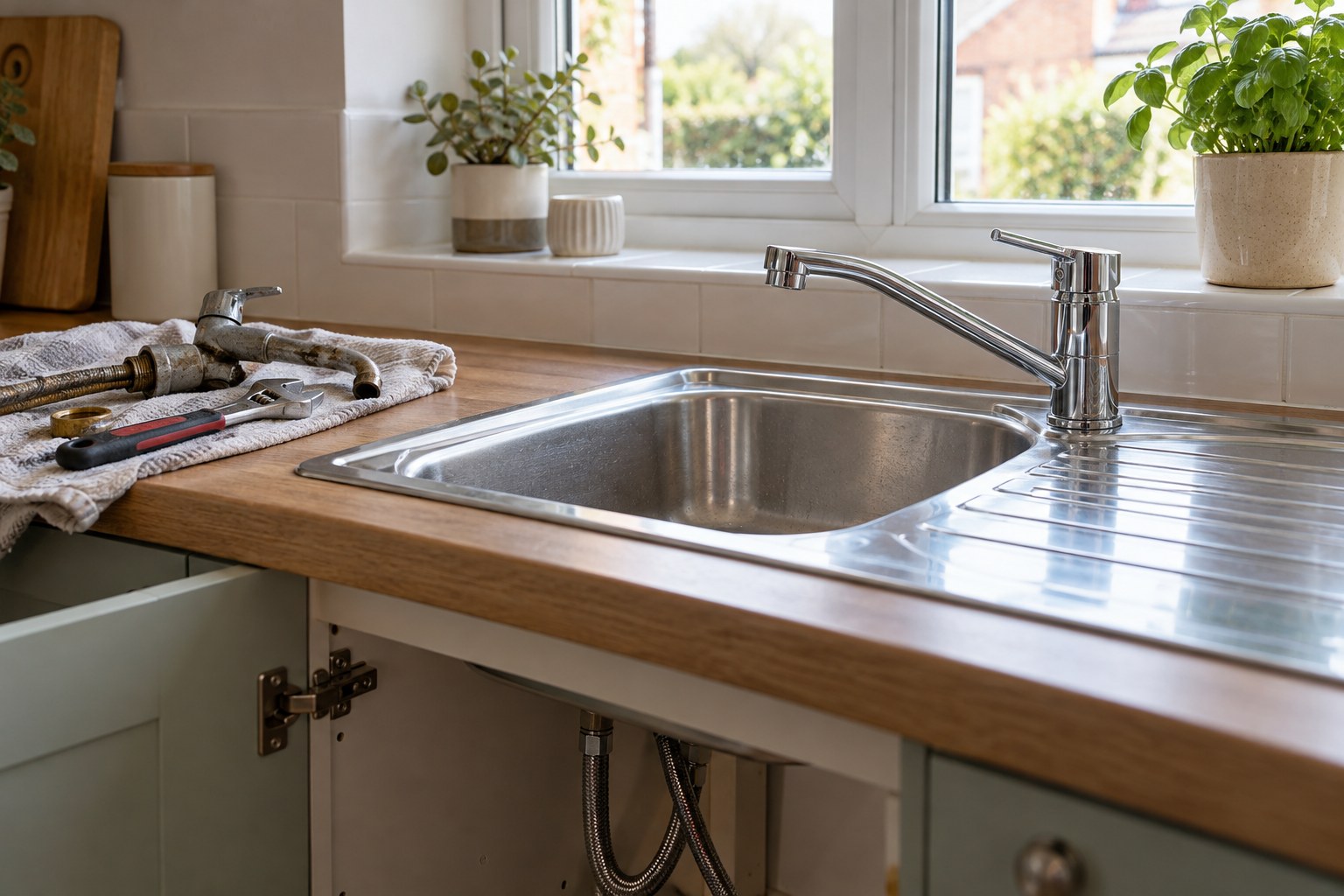
Signs you need tap repair or replacement
- The tap drips from the spout after being turned off firmly
- Water seeps from around the base of the spout or the handle
- The handle is stiff, grinds, or turns without ever shutting the water off
- A swivel spout leaks when it is moved from side to side
- Water collects in the cupboard below the sink from a flexible connector
- Flow is weak from one tap only, even after the aerator has been cleaned
Tap repair and replacement options explained
- Washer replacement — older taps that close with several turns use a rubber washer that wears and hardens. Replacing it, and sometimes reseating the brass seat underneath, stops the drip.
- Ceramic cartridge replacement — quarter-turn and lever taps use ceramic discs. A worn or scaled cartridge is replaced with a matching one; the spline count, length and turn direction all need to match.
- O-ring and seal replacement — leaks around a swivel spout or under the handle are often cured with new O-rings.
- Full tap replacement — a new monobloc mixer, pillar taps or bath shower mixer, fitted with isolating valves and new flexible connectors where possible.
The hot water system matters when choosing a new tap. Many modern mixers are designed for mains pressure and perform poorly on a gravity-fed hot supply from a loft tank. If you have a cylinder fed from a loft tank, look for taps rated for low pressure, or ask the plumber before you buy.
What to include when asking for a quote
Send a clear photograph of the tap and, if you can, of the pipework underneath it. A plumber can often identify the cartridge type, the connector size and whether there are isolating valves from a picture, which decides whether they can bring the right part on the first visit. If you know the make and model, include it.
For a replacement, say how many tap holes the sink, basin or bath has, what the worktop or basin is made of, and how easy it is to reach under the sink. A kitchen sink with a narrow cupboard and a fixed back panel takes longer than an open basin pedestal. Mention whether you are supplying the tap or would like the plumber to supply one.
Tell the plumber what hot water system you have: combination boiler, unvented cylinder, or a cylinder fed from a cold tank in the loft. That decides which taps will give a sensible flow and whether a low-pressure model is needed.
How much does tap repair and replacement cost?
| Job | Typical cost |
|---|---|
| Washer, O-ring or cartridge replacement | £80 – £130 |
| Fit a customer-supplied tap | £120 – £200 |
| Supply and fit a mid-range mixer tap | £200 – £300+ |
Designer and boiling-water taps cost considerably more. Prices assume reasonable access; awkward under-sink space or seized old fittings add time.
The tap repair and replacement process: what to expect
- Identifying the tap. The plumber checks the tap type and whether a repair part is available or a replacement makes more sense.
- Isolating. The supply is shut off at isolating valves, or at the stopcock if none are fitted, and the tap is drained.
- Repair or removal. The washer, cartridge or O-rings are replaced, or the old tap is disconnected and removed.
- Fitting. A new tap is secured to the sink or basin, connected with new flexible hoses and isolating valves where needed.
- Testing. Water is restored, connections are checked for leaks, and the aerator is flushed through.
- Handover. The plumber shows you where the isolating valves are for future maintenance.
Planning permission and building regulations
An ordinary tap repair or like-for-like replacement normally needs no planning application. The fitting and its installation must suit the water supply and the national water fittings rules, including suitable backflow protection where relevant. WaterSafe Register explains the scope of approved plumbing contractors. Specialist boiling-water taps or changes to electrical supplies may need additional expertise.
A bath tap with a handheld shower needs protection against backflow, either by limiting the hose so the head cannot lie in the bath water or by fitting a suitable check valve. In new homes and conversions, Approved Document G expects the hot water supply to a bath to be limited to a safe temperature, usually with a thermostatic mixing valve. Boiling-water taps also need an electrical supply, which should be installed by a competent electrician.
How to choose a plumber for tap repair and replacement
- Ask whether the plumber carries common cartridges and washers or will need to order the part
- Check whether they will fit a tap you have bought yourself, and how that affects their guarantee
- Confirm the price includes new flexible connectors and isolating valves if needed
- Ask whether the tap they supply is suitable for your water pressure
- Check how they price a repair that turns into a replacement on the day
- Look for membership of WaterSafe or a similar approved contractor scheme
For a one-tap job, a fixed price is usually easier to compare than an hourly rate. If several small jobs are waiting, such as a dripping basin tap and a running cistern, list them together so they can be priced as one visit.
Frequently asked questions
Is it worth repairing a dripping tap or should I replace it?
If the tap is in good condition and a replacement washer or cartridge is available, a repair is usually cheaper. If the tap is old, corroded, obsolete or you want a different style, replacement is often better value.
Will a plumber fit a tap I have bought myself?
Most will, though some only guarantee their labour rather than the tap itself. Check that the tap suits your sink, the number of tap holes and your water pressure before buying.
Why does my new mixer tap have poor flow?
Many mixers are designed for mains pressure. If your hot water comes from a cylinder fed by a tank in the loft, the hot side will be low pressure and a tap designed for low-pressure systems may be needed.
Can a plumber fit a boiling-water tap?
A plumber can fit the tap and the tank under the sink, but the unit also needs an electrical supply. If there is no suitable socket or spur, an electrician will need to install one.
Request tap repair and replacement quotes
My Plumbing Prices is a matching service for independent plumbing businesses. One free online enquiry can help you receive up to four quotations from local plumbers, depending on coverage, the work requested and availability. Four quotations are not guaranteed, and there is no obligation to accept one.
Describe the problem with the details above so plumbers can judge the job before contacting you. If water is escaping now, close the stopcock first: this form is for quotations and is not an emergency response line.