
What are shower plumbing and repairs?
Shower plumbing and repairs cover diagnosing and fixing showers that run too hot or cold, lose pressure, drip, or leak into the room below, and replacing the valves and pumps that control them. The work includes thermostatic mixer valves, both exposed bar valves and concealed valves behind tiles, power showers and shower pumps, and the waste and seals around the tray.
Shower faults are often connected to the hot water system feeding them. A mixer that works perfectly on a combination boiler can struggle on a gravity-fed cylinder, and a pump that suits a loft tank must never be connected to the mains. That is why plumbers ask about the system before quoting.
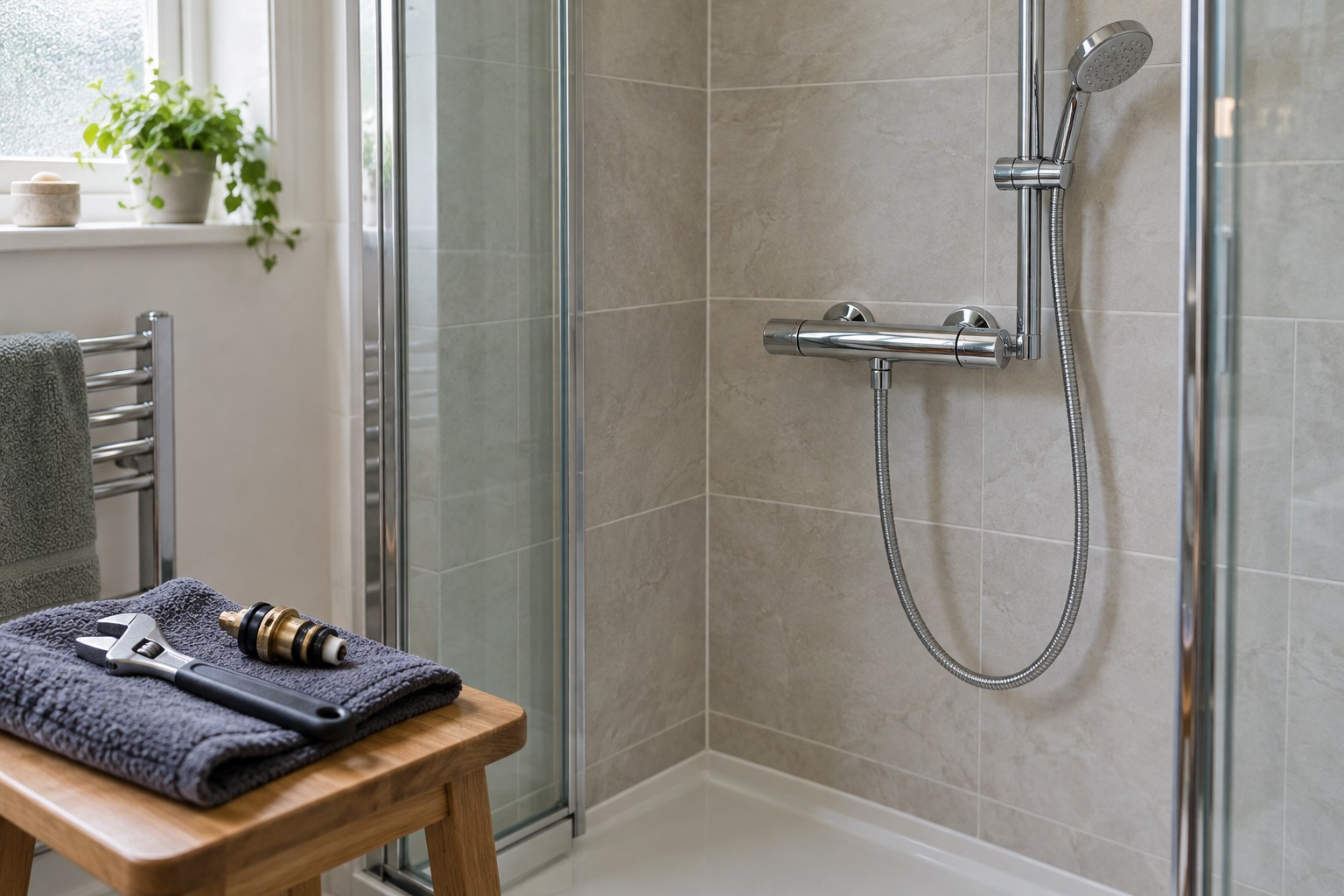
Signs you need shower plumbing or repairs
- The temperature jumps between hot and cold, especially when another tap is used
- Flow has dropped, or the shower takes a long time to warm up
- Water drips from the head long after the shower is turned off
- A stain or drip appears on the ceiling below when the shower is used
- The shower pump is noisy, cycles on and off, or no longer starts
- The diverter or control is stiff, or water leaks from around the valve body
If the stain below only appears after showering, the leak is likely to be in the tray waste, the seal between tray and wall, or failing grout, not in the pressurised pipework. Running the shower head directly into the waste without wetting the walls can help narrow it down.
Shower repair methods explained
- Cartridge and valve servicing — thermostatic cartridges scale up in hard water areas and stop balancing temperatures. Cleaning or replacing the cartridge, filters and check valves often restores normal operation.
- Bar mixer valve replacement — an exposed valve is replaced on its existing wall connections, usually without disturbing tiles if a matching size is available.
- Concealed valve replacement — a valve built into the wall may need tiles removing to replace the body, unless a compatible cartridge or retrofit kit can be fitted from the front.
- Shower pump replacement — pumps on gravity systems wear out. The replacement should match the head of water and whether the pump is positive or negative head.
- Tray, waste and seal repairs — a loose tray, failed waste or perished seal is repaired and resealed; sometimes the tray needs re-bedding first.
What to include when asking for a quote
Name the shower type and, if you can see it, the make and model printed on the valve or pump. Say whether the valve is a bar on the wall or concealed behind tiles, and whether there is a pump in the airing cupboard or under the bath. Describe the hot water system: combination boiler, unvented cylinder or a cylinder with a cold tank in the loft.
For leaks, say exactly when water appears below: during a shower, after the shower is off, or only when water hits a particular wall. Mention the age of the tray and enclosure, and whether you have spare matching tiles, because a concealed valve or leaking tray can need tiles removing to reach it.
Ask whether the quote covers only the plumbing or includes retiling, sealing and making good the ceiling below. If the shower is electric, ask whether the plumber can handle the water connections only, and whether an electrician will be needed for the supply.
How much does shower plumbing and repairs cost?
| Job | Typical cost |
|---|---|
| Cartridge service, filter clean or check valve replacement | £150 – £250 |
| Replace a bar mixer valve or shower pump | £300 – £650 |
| Concealed valve replacement or tray re-bedding with retiling | £650 – £1,200+ |
Parts are a large share of shower repair costs, and branded cartridges and pumps vary widely in price. Tiling, sealing and ceiling repairs below may be quoted separately.
The shower plumbing and repairs process: what to expect
- Diagnosis. The plumber checks the hot water system, pressures, temperatures and the valve or pump to find the cause.
- Isolation. Hot and cold supplies to the shower are isolated, along with the electrical supply to any pump or electric shower.
- Repair or removal. Cartridges, filters or check valves are serviced or replaced, or the faulty valve or pump is removed.
- Fitting. A new valve, pump or waste is installed to suit the system, with tiles removed and reinstated where agreed.
- Testing. The shower is run at different settings, temperatures are checked and every joint is inspected.
- Sealing and handover. Seals around the tray and enclosure are renewed where needed, and the plumber explains any settings.
Planning permission and building regulations
Ordinary mixer repairs differ from adding a new shower, altering an unvented hot water system or changing electrical circuits. The competence, notification and certification needed depend on the work and UK nation. Use a registered electrician for electrical installation work, including assessment of the existing circuit; see Electrical Safety First’s bathroom advice. Choose pumps and valves for the actual supply arrangement, and check relevant water supplier requirements before changing it.
Electric showers need a dedicated circuit. Replacing a like-for-like unit on a suitable existing circuit is usually straightforward, but a new or upgraded circuit is electrical work covered by Approved Document P in England and should be carried out by a registered electrician who can certify it.
How to choose a plumber for shower plumbing and repairs
- Ask how the plumber will diagnose the fault before replacing the valve or pump
- Check that any replacement pump or valve suits your hot water system and pressure
- Confirm whether tile removal, retiling and sealing are included
- Ask about the warranty on parts and labour for pumps and valves
- If the shower is electric, ask who will handle any electrical work
- Check membership of WaterSafe or a similar approved contractor scheme
A quote to replace the whole valve is not always necessary. Ask whether a cartridge or retrofit kit is available for your model first, especially if the valve is concealed behind tiles.
Frequently asked questions
Why does my shower keep changing temperature?
Often the thermostatic cartridge has scaled up or a filter or check valve is blocked, so it cannot balance hot and cold. On some systems it happens when another tap draws water. Servicing or replacing the cartridge usually fixes it.
Can a plumber fix an electric shower?
A plumber can assess water-side faults within their competence. An electric shower also involves electrical safety, even for a replacement unit. Ask for a registered electrician to assess, connect and test the electrical installation as required.
Can I fit a shower pump to a combination boiler?
A standard shower pump for a gravity-fed system is not suitable for a combination boiler. Ask a plumber to assess flow and pressure and recommend an option designed for your actual supply arrangement.
Does a leaking shower always mean retiling?
Not always. Many leaks come from a failed tray seal or waste that can be repaired without touching the tiles. Tiles may need removing for a concealed valve or a tray that has moved.
Request shower plumbing and repairs quotes
My Plumbing Prices is a matching service for independent plumbing businesses. One free online enquiry can help you receive up to four quotations from local plumbers, depending on coverage, the work requested and availability. Four quotations are not guaranteed, and there is no obligation to accept one.
Describe the problem with the details above so plumbers can judge the job before contacting you. If water is escaping now, close the stopcock first: this form is for quotations and is not an emergency response line.