
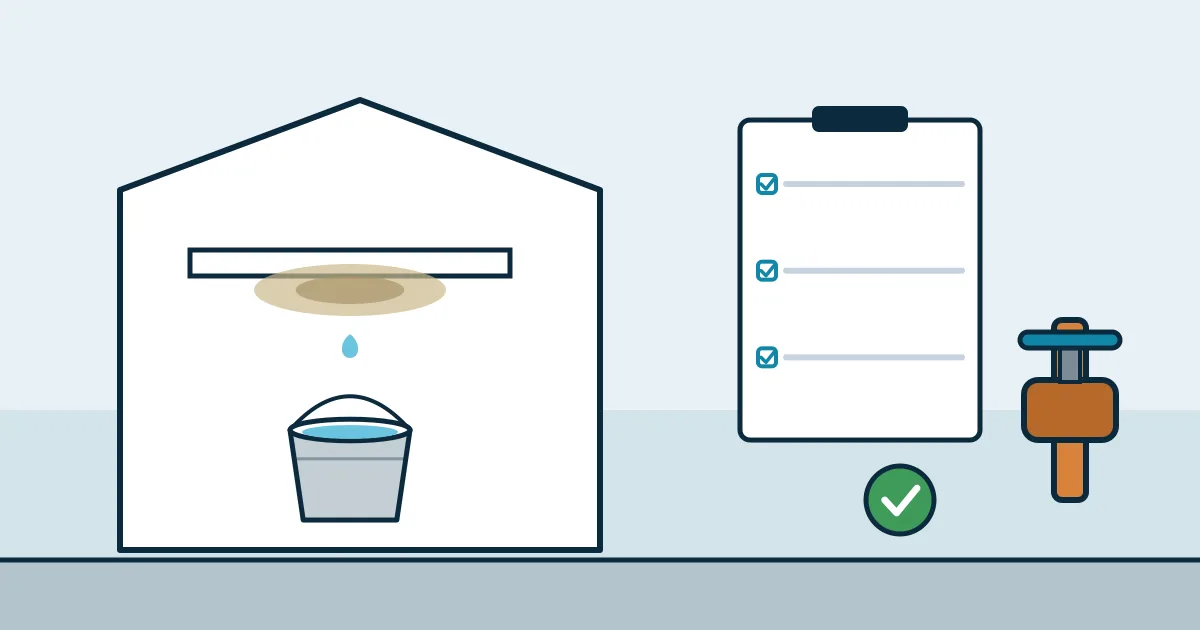
If you plan an escape of water claim, stop the water first, then photograph the damage before anything is moved, and keep every invoice. The order matters. Insurers expect you to limit the damage, and they will want to see what happened before it was cleared away.
An escape of water is the term insurers use for water that leaks from a pipe, tank or appliance into your home. Our emergency plumber and leaking pipe repairs services deal with the plumbing. This guide covers the paperwork that goes with it. It does not replace your policy, and cover varies between insurers.
Escape of water claim: what to do first
- Close the main stopcock to stop more water entering the house.
- Switch off electrics near the water, only from a dry position.
- Move belongings away and put towels and bowls where water is dripping.
- Photograph and video the leak, the damage and the damaged items, before anything is moved.
- Call a plumber to make the leak safe, and ask for an itemised invoice that names the cause.
- Contact your insurer as soon as you can, and ask what they need from you.
Do not throw damaged items away until the insurer has said you can. Keep samples of damaged carpet, flooring or plasterboard if the insurer asks for them.
What the plumber should record
Your insurer will want to know what failed, where and why. Ask the plumber for an invoice that describes the cause (for example, a failed compression joint or a corroded section of pipe), the location, and the work done. Photographs of the damaged pipe or fitting are useful evidence, and a good plumber will take them if you ask.
If the plumber only makes the leak safe and a permanent repair follows later, keep both invoices. The emergency plumber cost guide explains why the two are often priced separately.
How an escape of water claim is usually covered
Many home insurance policies cover damage caused by an escape of water, such as a stained ceiling or a ruined floor. Some cover trace and access, which means the cost of finding the leak and opening up walls or floors to reach it. Fewer cover the repair to the failed pipe itself, because insurers often treat that as wear and tear.
- Buildings cover usually deals with the structure: ceilings, plaster, floors and fixed fittings.
- Contents cover usually deals with furniture, carpets that are not fixed and your belongings.
- Excess: you pay the first part of the claim, and some policies set a higher excess for escape of water.
- Exclusions: policies often exclude gradual leaks, damp from lack of maintenance and unoccupied homes.
- Alternative accommodation: some policies pay for a place to stay if the house is uninhabitable.
Wording differs by insurer, so check the escape-of-water section of your own policy. A claim can also affect your premium, so ask whether it is worth claiming for a small repair.
If you disagree with a decision, complain to your insurer first. If you are still unhappy, the Financial Ombudsman Service can look at home insurance complaints.
If you rent or live in a flat
Tenants should tell the landlord or agent about the leak in writing as soon as possible, and keep a copy. The landlord is normally responsible for the supply pipes and the building, while the tenant's contents insurance, if they have it, covers their own belongings. In a flat, a leak from your home can damage a neighbour, so tell the freeholder or managing agent and your insurer.
Finding the leak before you claim
If you do not yet know where the water is coming from, our guide on how to find a water leak shows how to check. Once you know, the leaking pipe repair cost guide gives a feel for the repair price. Request up to four free quotes for a permanent repair once the insurer agrees the work.
How to prepare an escape of water claim
- Stop the water
Close the main stopcock and switch off electrics near the water only from a dry position.
- Record the damage
Photograph and video the leak, the damaged areas and damaged items before anything is moved or thrown away.
- Get the leak made safe
Call a plumber and ask for an itemised invoice that names the cause and the work done.
- Contact your insurer
Report the escape of water, ask what evidence they need and ask whether they will cover trace and access.
- Keep every receipt
Keep invoices for the plumber, drying out, temporary accommodation and replacement items.
Frequently asked questions
What counts as an escape of water claim?
Water that escapes from a pipe, tank or appliance and damages your home is usually an escape of water. Policies differ on what is covered, so check yours.
Does home insurance pay for the plumber?
Sometimes. Many policies pay for the damage caused by the leak and some cover trace and access, but the repair to a worn pipe is often excluded. Read the policy wording.
Should I fix the leak before I tell my insurer?
Stop the water and make the leak safe straight away, because insurers expect you to limit the damage. Tell them promptly, and keep photographs and invoices before permanent repairs begin.
Can I claim for a leak I did not know about?
It depends on the policy. Many insurers exclude damage that built up gradually over a long time, while a sudden leak is more likely to be covered.
Ready to talk to an emergency plumbing specialist?
Get Free Quotes →